War


My subject is war, and the pity of war..” wrote Wildred Owen, a First World War poet in the preface to a collection of his poems. He was well qualified to write about it, having known that particular hell- on- earth from the inside, in all its horror. His poetry tells a graphic story of war, it’s nightmarish realities and harrowing experiences. What it does to men and how it changes them. He was to die himself, in that nightmare, only seven days before it came to an end.

His writing exposed the lie of the glory of war especially to those who watched from the safety of untouched shores. Describing a poison gas attack in his poem

Dulce et Decorum Est

Bent like some beggars under sacks,
Knock-kneed, coughing like hags, we cursed through sludge,
Till on the haunting flares we turned our backs
And towards our distant rest began to trudge.
Men marched asleep. Many had lost their boots
But limped on, blood-shod. All went lame; all blind;
Drunk with fatigue; deaf even to the hoots
Of disappointed shells that dropped behind.

GAS! Gas! Quick, boys! — An ecstasy of fumbling,
Fitting the clumsy helmets just in time;
But someone still was yelling out and stumbling
And floundering like a man in fire or lime…
Dim, through the misty panes and thick green light
As under a green sea, I saw him drowning.

In all my dreams, before my helpless sight,
He plunges at me, guttering, choking, drowning.

If in some smothering dreams you too could pace
Behind the wagon that we flung him in,
And watch the white eyes writhing in his face,
His hanging face, like a devil’s sick of sin;
If you could hear, at every jolt, the blood
Come gargling from the froth-corrupted lungs,
Obscene as cancer, bitter as the cud
Of vile, incurable sores on innocent tongues, —
My friend, you would not tell with such high zest
To children ardent for some desperate glory,
The old lie Dulce et decorum est,
Pro patria mori .

(it is a sweet thing to die for one’s country)

The last three novels I have read, have coincidentally, had war as one of their main themes, from unusual angles. One covering the First World War, one the Second, and one the Trojan war. Different weapons, centuries apart, same violence and death. As well as its horrors, they also covered the deep bonds and camaraderie between those who fight alongside each other, facing death at every turn. It is now ten years since the start of the war in Afghanistan. The names and photos of all those young lives lost, have been posted on news websites in a silent role of honour. There have been interviews of bereaved families, and grievously wounded soldiers, telling their stories of lives changed forever. Time and time again, I have heard these soldiers talk of their time in active theatre with glowing eyes and wistfulness. Even after being very seriously wounded, they would go back tomorrow if they could.

Wilfred Owen also knew this feeling.

Apologia pro Poemate Meo

I, too, saw God through mud—
The mud that cracked on cheeks when wretches smiled.
War brought more glory to their eyes than blood,
And gave their laughs more glee than shakes a child.

Merry it was to laugh there—
Where death becomes absurd and life absurder …

The title of the poem means ‘an explanation for my poetry’ , and these are the opening lines. I guess there never is a time more ‘real’, than when life is stripped down to its bare essential, survival. There is only the intensity of the moment, and living it with all you have and are. Perhaps this is what calls them back, as well as being back with their fellow soldiers? I can only speculate from the sidelines. I have lived through a couple of wars, but was not directly involved or affected, apart from being evacuated a few times. I am perhaps not qualified to speak, which is why I am using allot of other people’s words, who are.

In the First World War, it seems to me, there was so much blood spilled with very little actually gained. A mile or two of muddy Belgian Front, perhaps. Afghanistan is a very different type of war, and yet, ten years on, it is hard to see what, if anything has been gained. The costs, however, are very obvious.

“Every gun that is made, every warship launched, every rocket fired signifies in the final sense a theft from those who hunger and are not fed, those who are cold and are not clothed. This world in arms is not spending money alone. It is spending the sweat of its laborers, the genius of its scientists, the hopes of its children. This is not a way of life at all in any true sense. Under the clouds of war, it is humanity hanging on a cross of iron.” April 16, 1953 Eisenhower

Ghandi had a very similar view, put more concisely.
An eye for an eye, only makes the whole world blind.”

People in probably every war there has ever been, have thought similarly. Andrew Downing, an architect and poet who fought in the American civil war in the 1800’s wrote these lines, ( a selection from his poem The Bluebird) looking back to his experiences of war, and forward to the time when God’s Kingdom would come on earth, and the prophesy in Micah 4:3 about spears being used as pruning hooks, and ‘nation will not take up sword against nation, nor will they train for war, anymore.’ would come to pass.

I am reminded of the battle years

When men, full-armed, and wearing suits of blue,
Marched to the music of the fife and drum
In strong battalions in a southern land.
And all the pomp and blazonry of war–
Guidons and banners tossing in the breeze,
Sabers and muskets glinting in the sun,
Carriage and caisson rumbling o’er the stones,
The midnight vigil of the lone vidette,
The shock and roar of battle, and the shouts
Of the victorious army when the fight
Was done; the aftermath of sorrows deep–
The cries and moans of wounded, dying men,
The hurried burial of the dead at night,
The broken lives in many homes, the hearths
Made desolate–all these come back to me,
As I beheld and knew them once; and then,
In sad reflection to myself I sigh:
What weak, inglorious fools we mortals are
That war must be, or any need of war.

And yet, the better day is coming when
The teachings of the lowly Nazarene
Shall be the rule of nations–as of men;
The sword and bayonet shall be preserved,
By the fair children of a nobler race,
As relics only, of a barbarous past

AMEN.


Empty handed

“Take nothing with you” Jesus command to those he sent out ahead of him. Empty. No resources. It seems madness, and something we very rarely, if ever, do. On any level. If we can help it, that is. Like the proverbial girl guide/scout, we go prepared. Instilled us from childhood. And then one day, circumstances tip us on our faces, and we are vulnerable. Dependent on others, and it isn’t a comfortable feeling. At least not for an independent person like me. Recently I found myself stranded in another country, with no passport, credit card, or means to keep body and soul together. Not a good place to be! If you don’t have a passport, you can’t fly, even within Europe, especially if you have no other means of identification. Thankfully for me, before they caught their plane, the friends travelling with me emptied their pockets, and gave me what spare cash they could. This enabled me (eventually) after an adrenaline fueled day, to get an emergency passport and another flight home, late that night. Just. I had to sit and count out my euros more than once to make sure I could commit to booking a flight, and several rail and bus tickets, and have enough to stump up for the passport. (€113) I did. But nothing left. I had to ask the British Consulate if they had an emergency fund that could give me a little money in order to eat and drink.
“Spare any change for a cup of tea?” the plaintive request from the person on the street, and now it was my turn. I would much rather not have asked, but I had been running from pillar to post, and I was hot and tired, and hungry. And there was nothing on the horizon for a very long time. It was a humbling and salutary experience, I won’t forget in a hurry. Walking around a large European city with a few euros in my pocket to my name, was another. My experience was temporary, and I was very conscious of that too. For others it is a daily reality.
There are many ways we can be thrown on others care. I have known what it is to be seriously ill, and so weak and incapacitated that I could do little or nothing for myself and had to ask for everything. Or wait for someone to notice. It was an equally humbling experience. But good for me. Allowed me to step in other’s shoes. It made me an infinitely more empathetic nurse, and I thought I was pretty tuned into patients needs before that. I am sure it will be a valuable experience in my future ministry as a priest.
I think Jesus knew that his disciples needed to go out with nothing. They didn’t go as ‘fixers’ or ‘providers’ or even the ones with all the ideas. They had to go out and learn to receive. They had to depend on God for everything, spiritual and temporal. They had to be beggars of a sort. No security back up plan. I don’t imagine it was comfortable, but it was a foundational learning curve for when they would later scatter across the world and turn it upside down. Empty handed. I remember a song by John Pantry many years ago. A song writer I once knew, said that song lyrics, devoid of music read like bad poetry, but I will quote the words anyway:

Empty handed.
That is how he wanted me.
He commanded,
I left my own plans at His feet,
’til I had nothing, nothing of my own,
But then He filled my life to overflowing.

Oh how I wanted to be godly.
Oh the things I planned that I would do for good.
But my life was so full with the plans of my own,
I couldn’t see the plans He had for me.

He lived among us, and never owned much,
And laid aside His life to do God’s will.
All we ever put in his hands
Was the cross He bore,
And the nails that tore.

Empty handed.
That is how He wanted me.
He commanded I left my own plans at his feet,
’til I had nothing, nothing of my own,
But then He filled my life to overflowing.

Sounds a bit like this?

Philippians 2:5 (MSG)
Think of yourselves the way Christ Jesus thought of himself. He had equal status with God but didn’t think so much of himself that he had to cling to the advantages of that status no matter what. Not at all. When the time came, he set aside the privileges of deity and took on the status of a slave, became human! Having become human, he stayed human. It was an incredibly humbling process. He didn’t claim special privileges. Instead, he lived a selfless, obedient life and then died a selfless, obedient death—and the worst kind of death at that—a crucifixion.

Not much you can add to that. Nothing, in fact.

Taizé

High on the ‘Bucket List’, Taizé is a place that has called me most of my adult life. I haven’t been able, for a variety of reasons, to answer that call. Until now. God’s timing, however is always best, and this has been a timely visit. At the end of a long, busy summer that has been high on the ‘demand’ factor. Placements, essays, exams and overseas trips calling much from me and stretching me in many dimensions. Growing stuff, I wouldn’t be without, ( except the exam bit, perhaps) but God’s rhythms require balance. Retreat and rest, as well as service and growth.

Taizé is like a long hot soak in a scented bath. A gentle place. Gentle in pace and approach.  Room to unwind and relax in a restful, spiritual environment. A truly ecumenical centre, where the sharp boundaries and denominational divisions are deliberately blurred. A confluence of nations, people come week after week, from all over the world, predominately large numbers of young people. Language barriers are overcome with careful listening, love and laughter as lives are shared within the context of small groups.

The accent is on simplicity. In everything. Worship is both simple and profound. The pattern follows the rhythm of the Community, with morning, noon and evening prayer. Firmly God focused, the liturgy and music flows naturally and easily. Led by various of the monks, who occupy the central aisle of the church, disembodied voices, in a variety of languages, guide the prayer and song. There is little to get in the way, in this very ‘thin’ place. It is a very moving experience to worship with thousands of others from all over the globe- all sitting or kneeling together on the gently sloping floor. All pretensions, roles and higherarchies are left at the door. Child or bishop, are as one before God. When you are already on your knees, the only step to bow the spirit, is on your face.  Lighting is soft, with the dancing flames of a hundred or so candles gracing the chancel. You are bathed in God, in a wash of Love.

We were told the story of a young German atheist who came to Taizé out of curiosity. She could give you a thousand reasons why God simply could not exist. At the end of the week, however, she confessed to one of the brothers, ” I am beginning to have my doubts about that.”

Presence. Gentle and unassuming, and yet inescapable.  Brother Roger started the Community in the tiny village of Taizé, in France, during the Second World War, as a ‘mustard seed’ of Peace. An alternative to the craziness of war. Bringing people and nationalities together in reconciliation and understanding. His faithfully planted seed has become a spreading tree under whose branches the nations have gathered to find rest and discover God.

Spoons. All you need to eat with, at Taizé. Food is simple too, but wholesome and nourishing and a miracle of provision. Feeding thousands a day, in a well practised organisation of willing volunteers that has to be seen to be believed. Within minutes all are eating, from trays on their laps, spread out across the site. More than once I had a picture of a hillside in Galilee, and a carpenter from Nazareth, a couple of thousand years ago.  Shortly after, it is all cleared away and washed up, by yet more volunteers,  often singing, with their arms in buckets of suds.

Taizé is somewhere to bring others to. Young people in particular. Those of faith and none. It is a place you can take at many levels. Forget any ‘Taizé’ services you may have attended. Good or bad, they are very different from the real thing. One of the brothers described Taizé as ” a place to re-discover the joy of living, the joy and the love of God” .  I couldn’t agree more.

To find out more go to: http://www.taize.fr/en

Red dust in my shoes ( out of Africa)


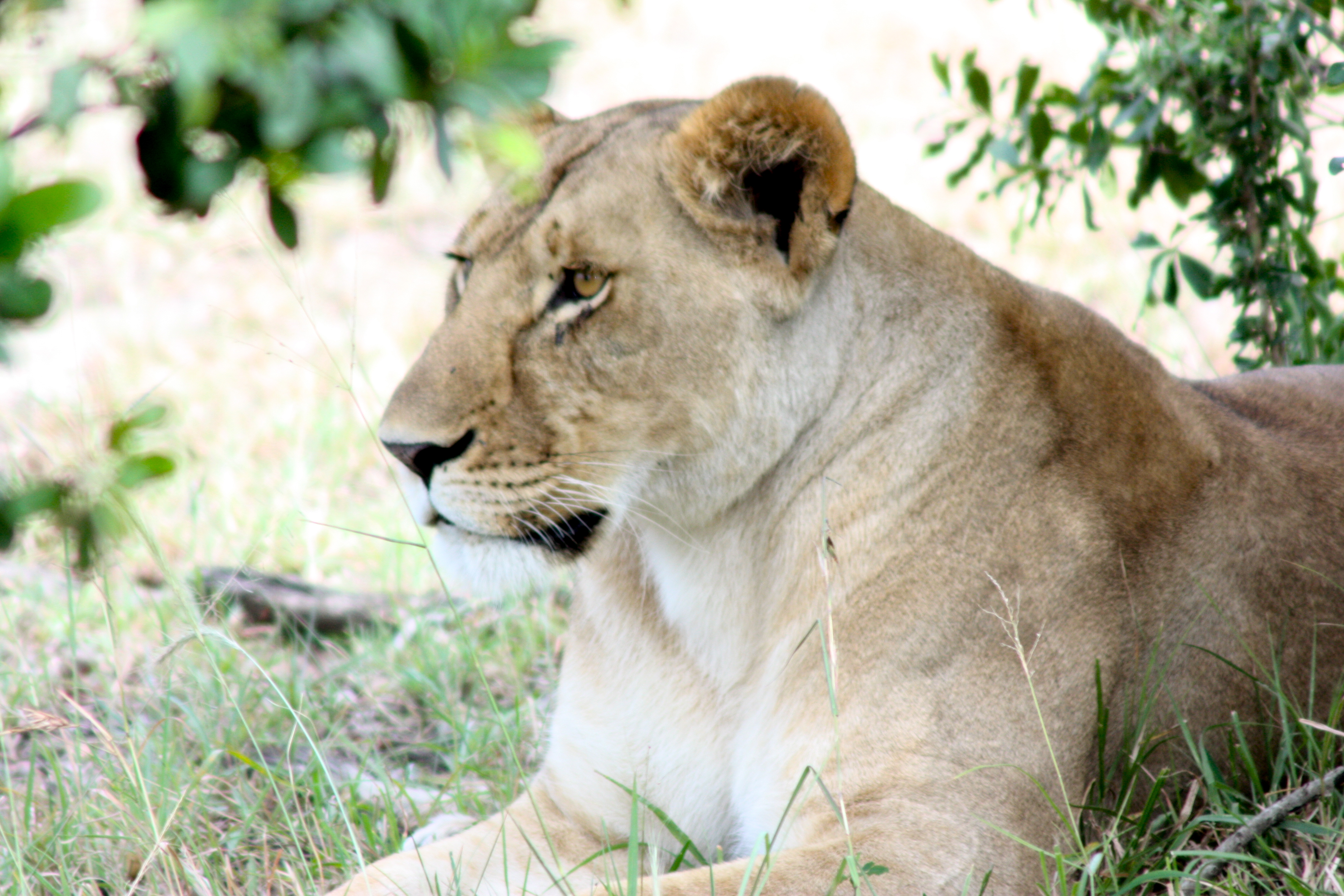
Africa has a way of stealing your heart. Perhaps the more so because I was born there and grew up under African skies. The visit this summer to Kenya and Uganda has involved a great deal of journeys. Hundreds and hundreds of miles, across both countries, on pot-holed, bumpy roads and dusty dirt tracks. Tiny villages, humble mud huts, wide open savannahs and rolling hills. A wealth of wildlife, up close and personal. The extraordinary privilege of observing lions, cheetahs, giraffes and elephants and many more, in their natural environment, often only a few feet away. July and August are the months of the Great Migration when the wildebeest and zebra migrate from Tanzania to Kenya’s Maasai Mara – the largest mass movement of land animals on the planet. It is a wildlife spectacle that has to be seen to be believed – the sheer numbers are amazing, as is the way they travel in lines – stretching out miles in both directions, drawn on by a never-ending quest for fresh pastures. This smorgasbord of ‘ready meals’ is a huge draw to the predators who travel with  the ready abundance.

This has been a trip of emotional journeys too. Forging real links with people and places that had been simply names on a map, and email contacts. The warmth of their welcome and hospitality, even in the most humble of circumstances. The experience of living in almost total minority – there simply are no other white faces in Bungoma, and most of the children we met in the schools, had never seen one ‘in the flesh’.  Odd to be an ‘oddity’, a source of fascination and wonder, and our ‘semi- celebrity’ status, even harder to deal with.

Steep learning curves. Speaking with almost no preparation, at a moment’s notice. The need to contextualise, making the Gospel relevant, and ridding it of ‘church speak’ and Westernisation. The need to connect with very different groups of people and speak from the heart. Learning to worship in another language and much more vibrant style. Praying with, and for, our brothers and sisters, and witnessing that sometimes language is irrelevant. Love and faith transmit, regardless, and language has never been a barrier to the Spirit.

Kenya’s red dust gets everywhere, and into everything. It is hard to shake off.  It travels with you. Jet travel transports you within hours from one ‘universe’ to another, but Africa is not that easy to leave. It steals your heart and keeps a bit.

Changing the future


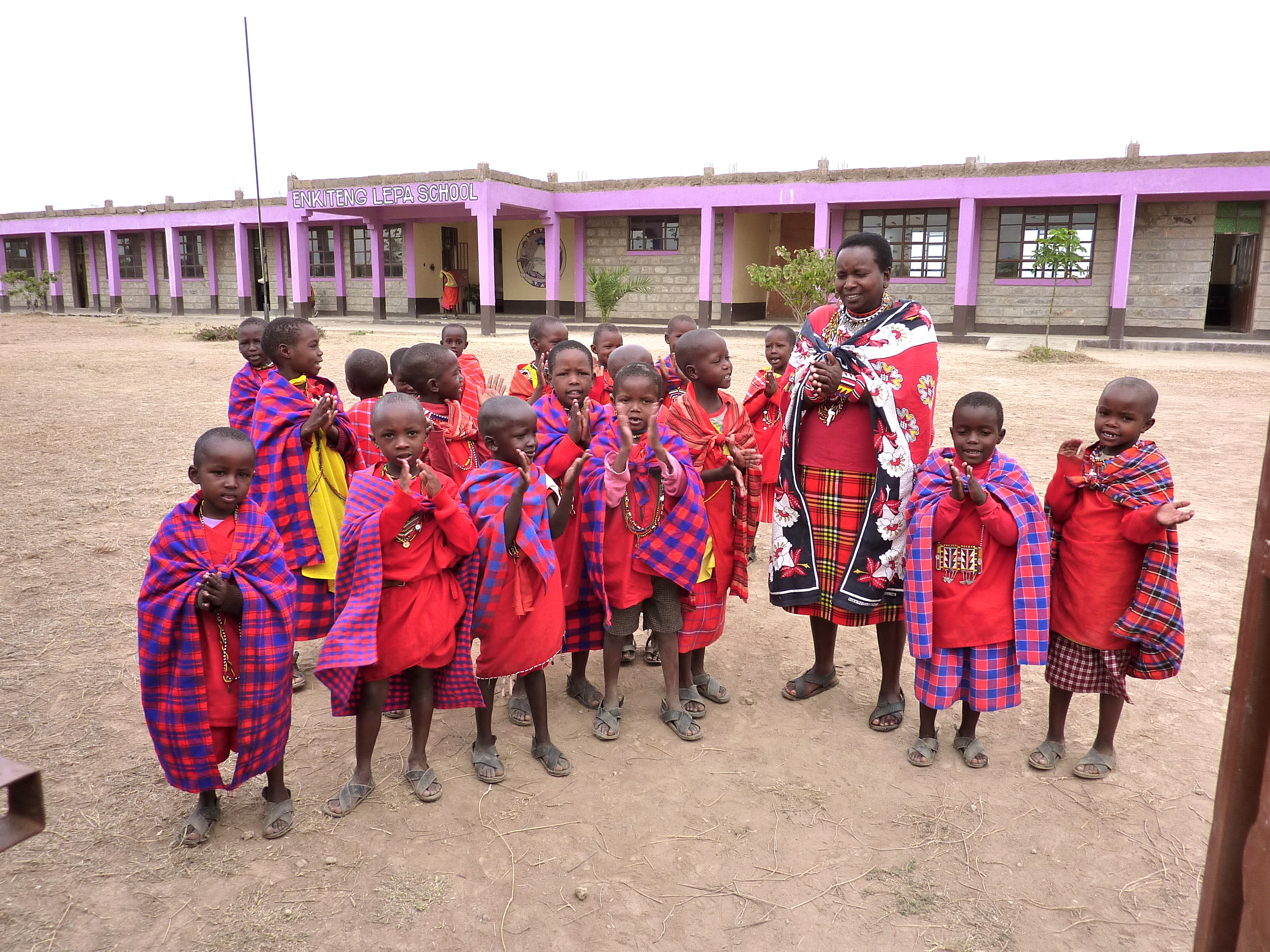
A couple of weeks ago, we stayed in a Maasai eco camp. It’s purpose was to support widows, and young girls rescued from FGM, and forced early marriages. In Maasai culture widows are not allowed to re- marry, and so have no means of support. Although it is against the law in Kenya, FGM is still practiced by some tribes. ‘Female Circumcision’, it is more usually known as, although mutilation is a more truthful description. It leaves girls with multiple gynae and obstetric problems, which frequently prove fatal. The trauma of the procedure itself ( performed at 5 or 6 yrs) and then being married off at 10 or 11 to perhaps a 50 yr old man, in exchange for several cows, does not bear imagining.

A dynamic Kenyan lady called Helen, is a one woman crusade to stop the process and to provide the girls with an education instead. She has set up a wonderfully equipped school, with boarding provision for the rescued girls. Uniquely in Kenya, the children are allowed to wear their national dress ( a vital part of Maasai culture).

She seeks to hold culture in one hand and education in the other and demonstrate that both go well together, and are necessary for the future of the Maasai. Against fierce opposition and misunderstanding from her own, she nevertheless is doing a wonderful job, one child at a time.

We stayed in a traditional Maasai hut, made of mud, cow dung, mixed with bonfire ash ( walls, floor and roof). It was warm and snug against the cold of the desert night, and successfully kept out all animal, reptile or insect intruders. In the early hours we woke to the sounds of a large mammal sniffing around the outside, the tracks of which proved it to be a hungry hyena , probably attracted by the Maasai cattle. Prior to retiring, we sat with our Maasai hosts, around the camp fire, listening to stories of their culture and traditions. They also gave us expert instruction on what to do if faced with a lion or an angry elephant. Necessary, life saving information in that environment, but not training I ever hope to require putting into practice!

Border Crossings

It is mid afternoon. The bus is full, and stifling. It is running nearly two hours late, and the kamikaze bus driver has decided he will make up time, overtaking three lorries at a time, and rolling this elderly tin can from lurch to lurch. Seat belts, like suspension, are things to dream of.

In a scruffy little town, it pulls to a stop and everyone gets off. It seems this is the border, but you have to guess that, along with where you have to go to have your passport stamped, photo taken, and fingerprints digitally recorded..eventually.  Leaving there and it is more alarming guesswork. A street hawker tells you, delightedly, ‘ Mama, the bus has gone!’ … and sure enough it has. Where, is the next part of the mystery tour, it seems, along with the forlorn hope of ever seeing our luggage again.  Hand luggage in tow, and life in hands – the road ahead has no pedestrian zones or provision. Health and safety assessed? I think not.  Bikes, buses and huge lorries aplenty, and little care for those struggling on foot. Nearly 1 k or so and it seems there is another sweaty office of officialdom waiting a repeat performance of assessment. Welcome to Uganda.

After the long queue, to be officially validated, the bus magically appears, along with the daemon bus driver ( and luggage! Woo hoo!) Even fuller this time. Every seat + 3/4 without. Squeeze ’em in, stack ’em high. This roller coaster is leaving now. Destination Kampala, six hours down the track.

Returning, the bus had been pre-heated for us, to optimum BBQ temperature, by standing on a forecourt, all windows and doors closed, in the midday equatorial sun.  At least when we approached the border, we had an inkling of what might happen. Except now it was dark. Pitch black.  Same sweaty office, same blank faced officials ( are they ever allowed to leave?) – then the crossing game, made all the more interesting by being unable to see, or more importantly, BE SEEN., by the said bikes, buses and lorries it was necessary to weave our way through.

Second security office. Three European youths, ahead of us, disallowed because of not having the right paperwork. Stranded, late at night in a nowhere border town. Welcome to Kenya, or not, as the case may be.  The bus driver obviously feels we need some exercise and further excitement as he drives past us, on into the night.  He does stop, eventually, but much further up  the dark road. Everyone piles back in, although no tickets are checked, so it is assumed it is the same passengers. Another European youngster in trouble. He had been told this bus would stop at Kisumu. No where near. It looked like he would have to stay on the rest of the night, til Nairobi and get another long bus ride the next day. We took pity on him, and promised to fix him up with decent lodgings in Bungoma, our destination. This should have been an hour up the road. The Kenyan security police have other ideas.

Police check points are regular events all over Kenya. We were given various reasons for them, not all of them kosher. Sometimes I think they are just bored, and want to throw a bit of weight around. So bus stopped. Everyone out. Lined up in male/female lines in the bus headlights and frisked. Bags poked and half heartedly searched. 3/4 of an hour standing in the dark, with patience at a low ebb, after an eight hour journey, at this point.   I was close to giving them a piece of my mind, but wisdom prevailed. That would have meant another two hours and good knows what else.

They say you don’t get under the skin of a country, until you have travelled on local buses..  it certainly adds spice. It seems the walking across the border lark is a regular event all across East Africa. How they know who actually comes in and out, despite the elaborate paperwork is a mystery. Just walk across in the dark and hop on a bus, if you can find one that is.. and one doesn’t find you first.

Into Africa


A few weeks ago we flew into Kenya. The start of whole series of adventures that aren’t over yet. For the first 12 days, we visited Bungoma, off the beaten path in the NW of Kenya. Our diocese are linked, and in my sending parish, I set up a parish/parish link. We flew in with the current link secretary, to cement this link with some face/face time. Over the course of 12 days we saw 6 schools and 7 churches. All of them bowled us over with their warmth and welcome. We were plunged in the deep end from the start.  Expected to stand up and speak/preach  with no preparation or notice. Even expected to lead a day’s seminar for church leaders. It sharpen’s one’s dependency on the Holy Spirit like little else… “I need some words, Lord, and I need them NOW!” Scary as hell, but eventually quite liberating.

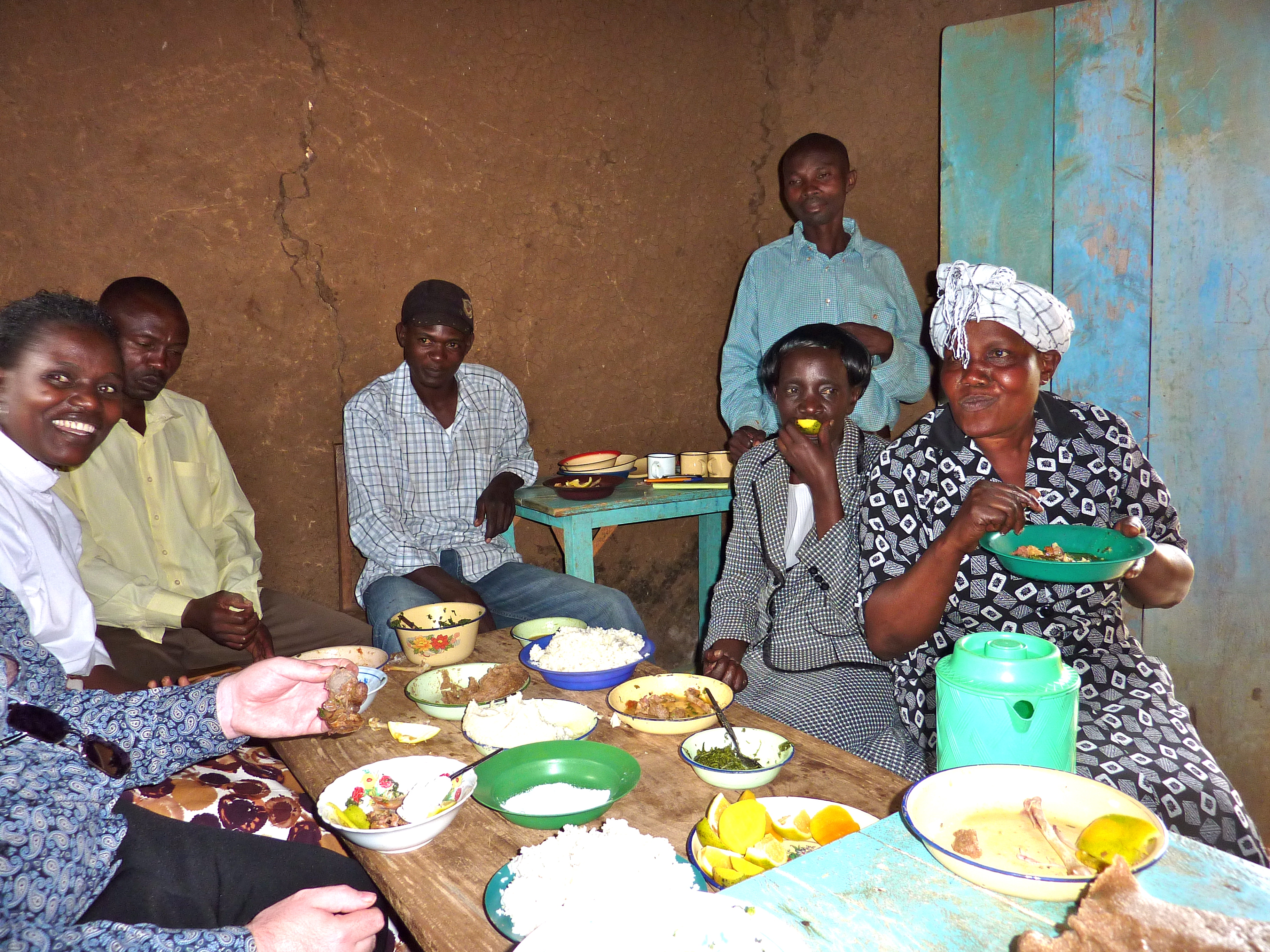
We bumped about the diocese in a land rover that had seen better days 30 years ago. Roads were a bone jolting series of ruts and potholes.  However, even the bikes overtook us going uphill!  They fed us everywhere. “Do take tea.” and then a table groaning with food. Rice and ugali ( maize meal) to feed a multitude and the inevitable ‘cuckoo’ – chicken. Being veggie I escaped the latter and especially the gizzard, especially reserved for honoured guests. Their bountiful and generous hospitality was the more moving because we knew it was sacrificial. They had very little, but they gave us the best they had.

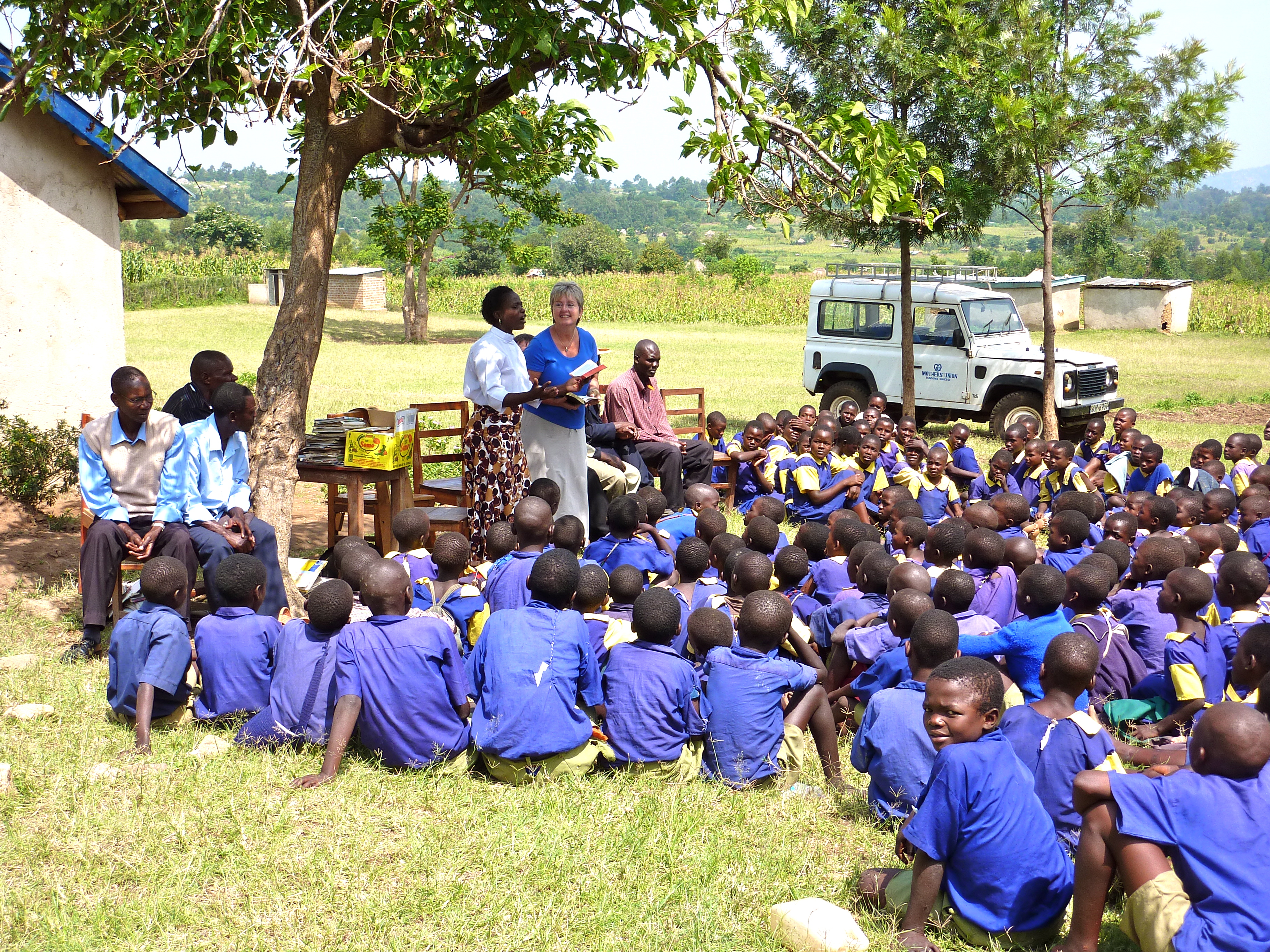
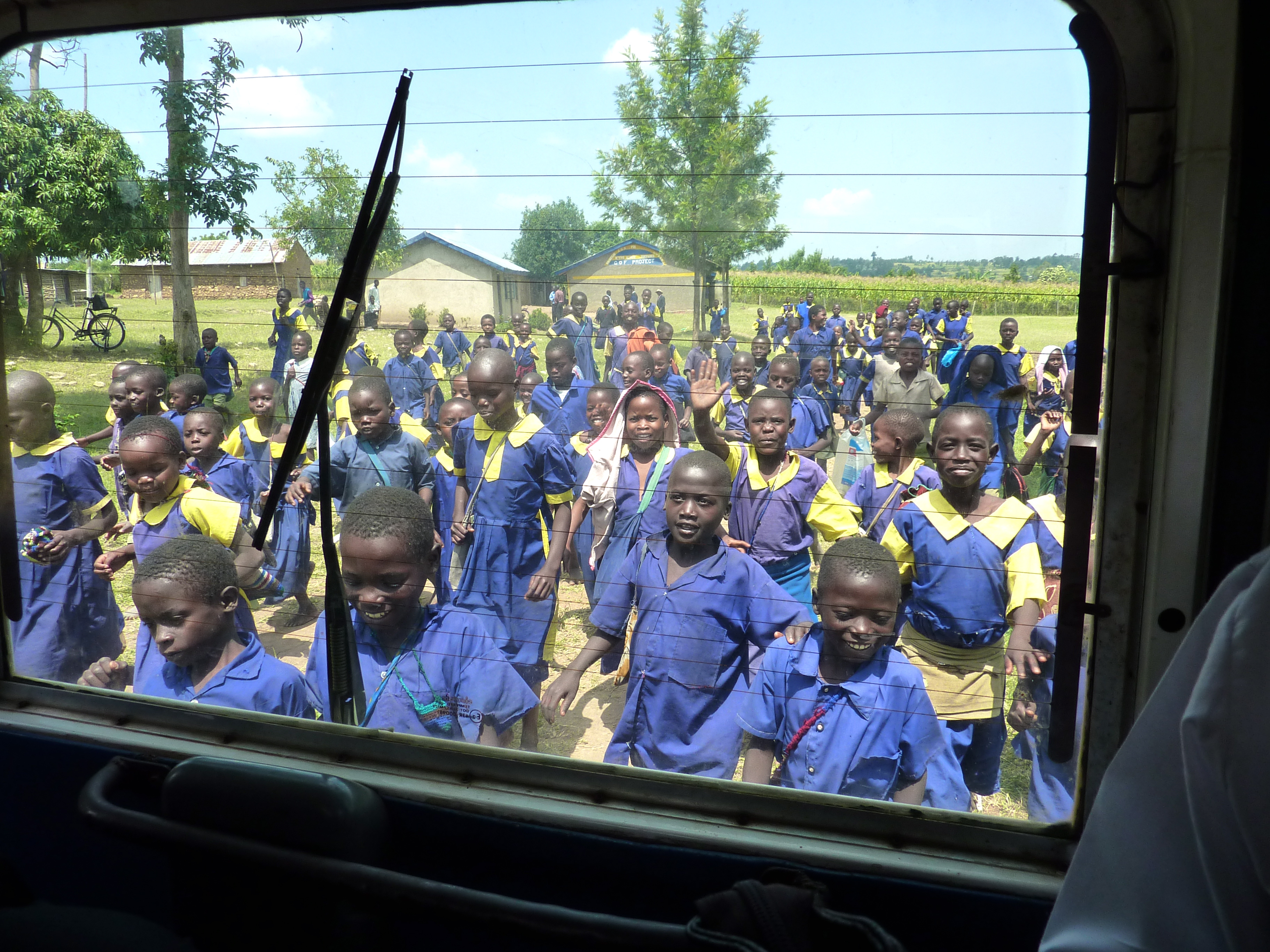
The children were equally enthusiastic to see us. 100+ to a small classroom, 3 or 4 to a bench, with mud floors and walls and dark airless classrooms lit by a hundred smiles as wide as the sea. Keen to learn, they do wonders with next to no resources. They put in a long day, without being fed, and often have to walk several kilometers to school and back. A very high number of them were orphaned by the scourge of Aids. They danced and sang for us, and were highly delighted when we joined in. We spoke to them all under the shade of a large tree and afterwards were overwhelmed by upwards of a thousand small hands wanting to shake ours.

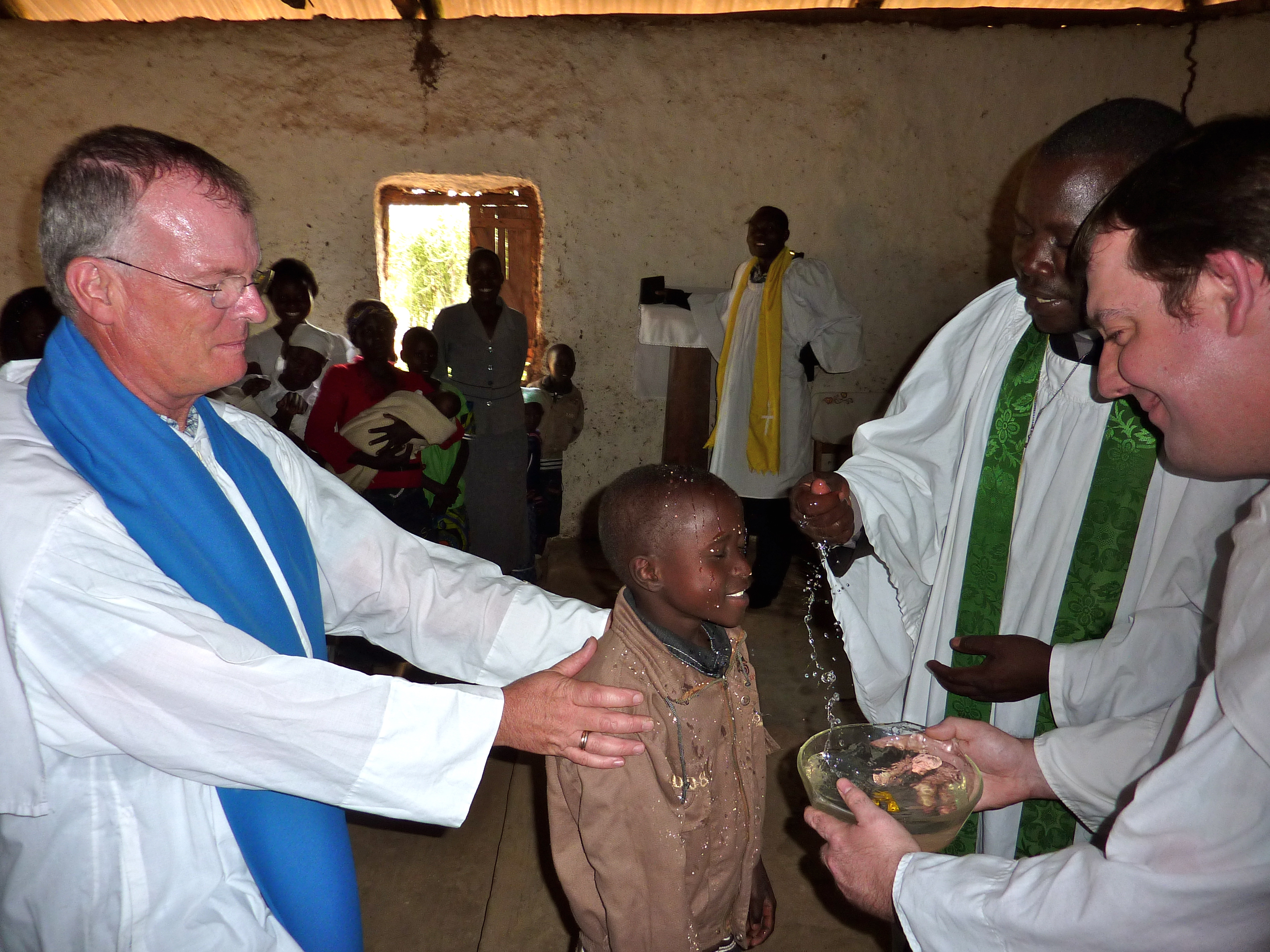
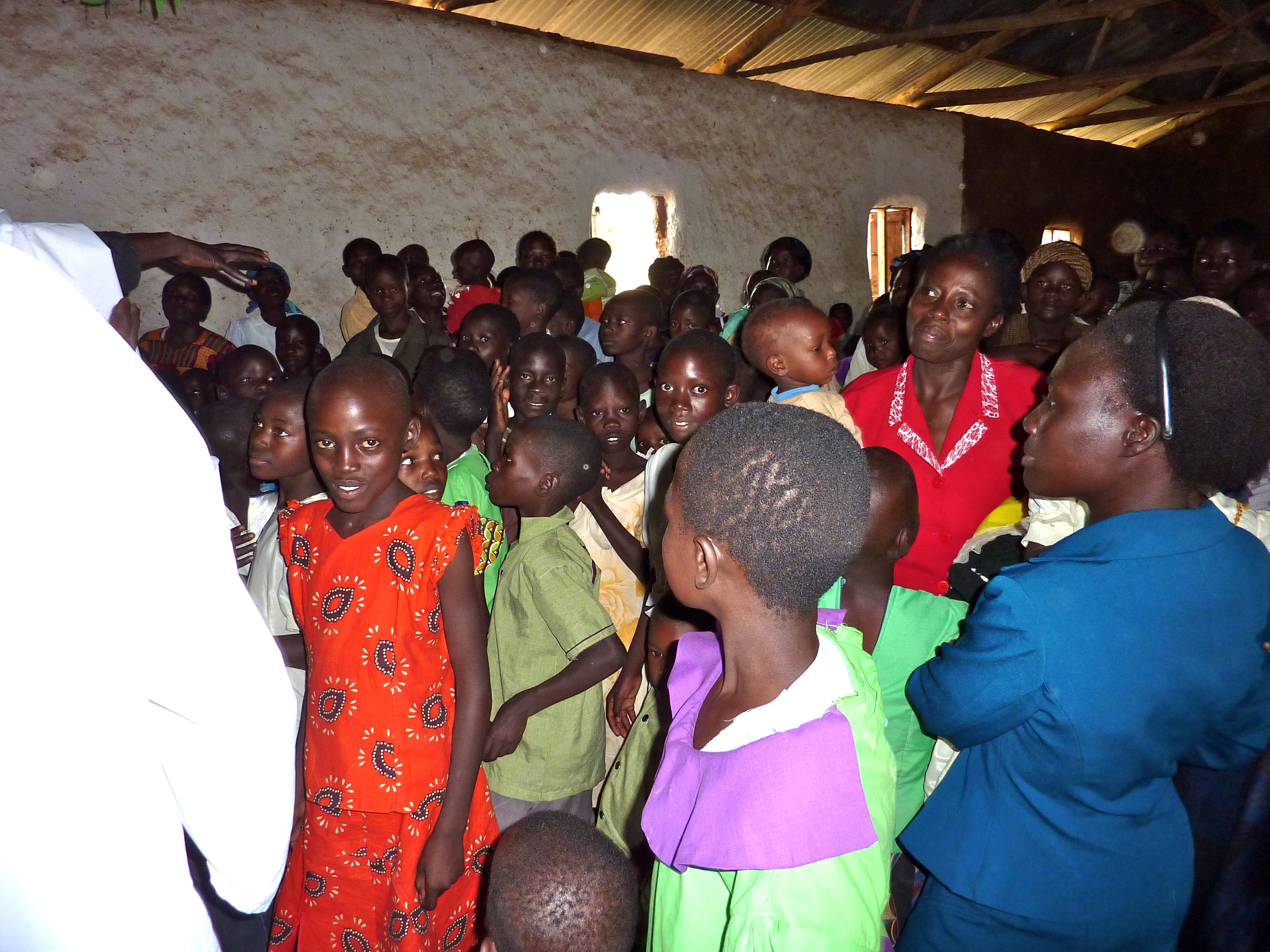
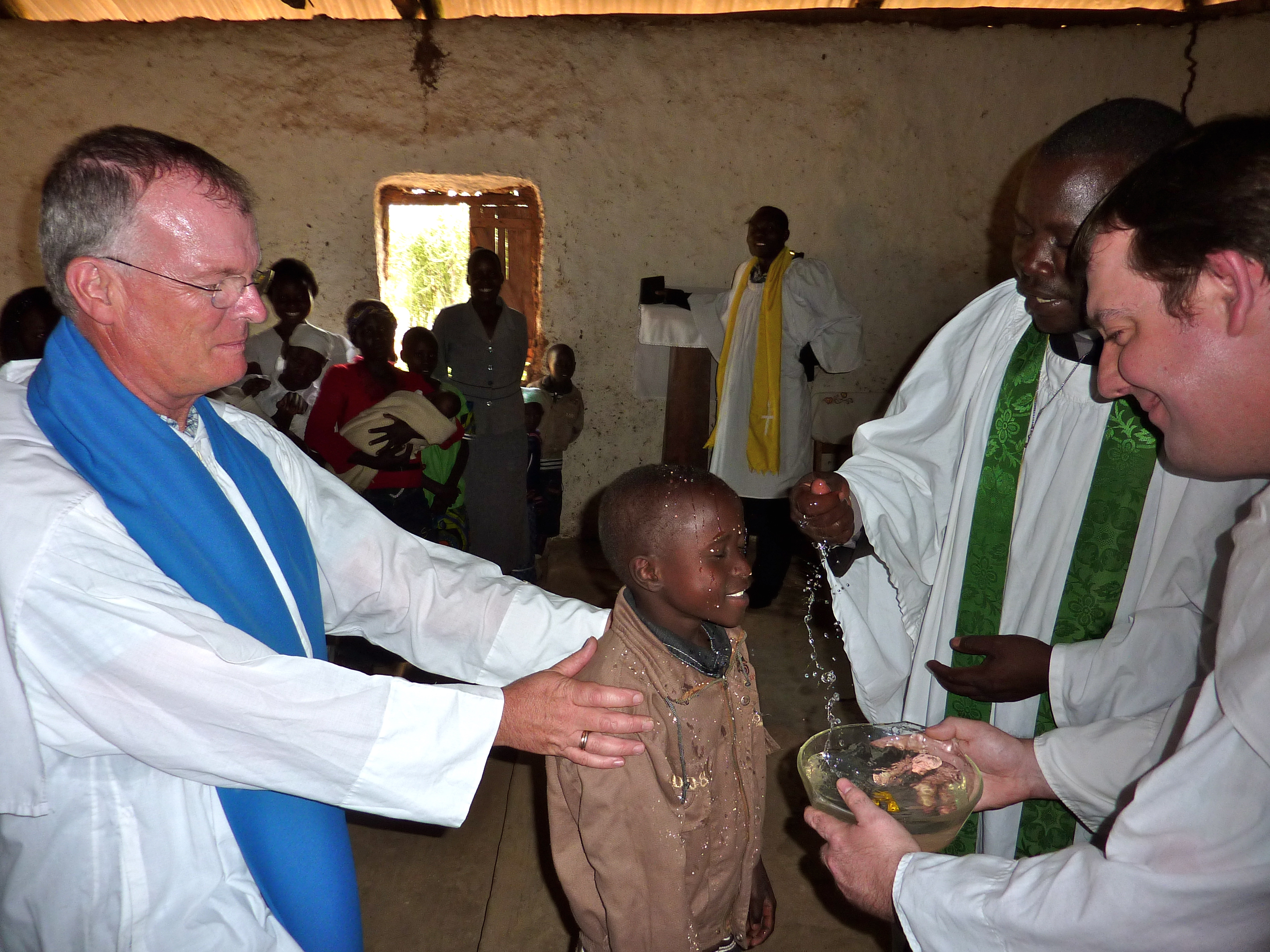
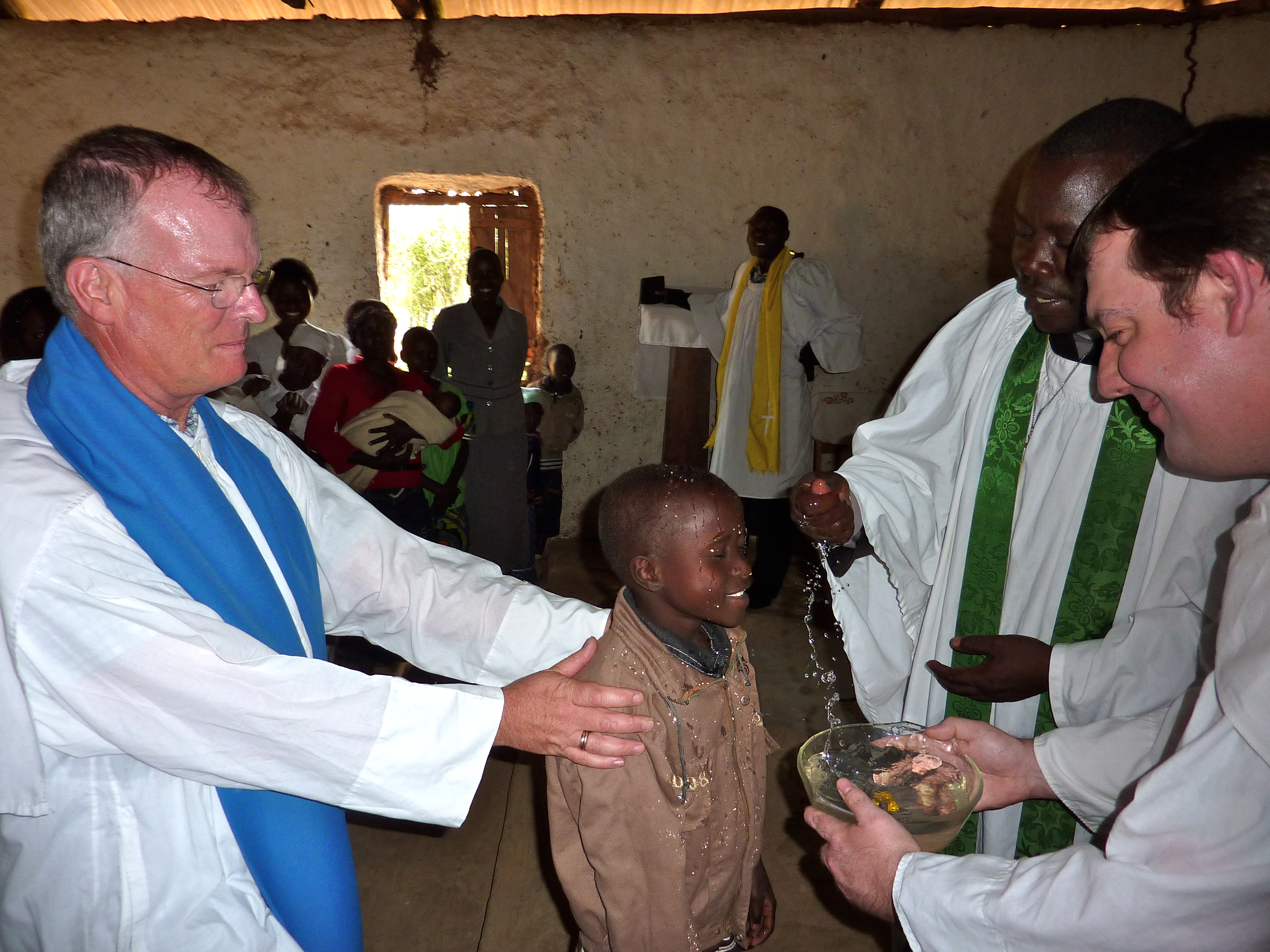
The churches had little or nothing materially, but were bursting with spiritual life and enthusiasm. Services went on for hours.. the longest was over 4 with 21 baptisms! We were made honourary godparents to all of them. Neither they, nor we had any choice in the matter. It was a noisy, jubilant occasion, with a great deal of dancing.

I had the unenviable task of being asked to teach on stewardship. Something I have done before, but this had a very different feel and context. Watching the offerings being taken was a very moving moment. Sometimes all they could give was a sack of beans- but it was offered as wholeheartedly as anything else and given to the glory of God. It brought a lump to the throat, a not uncommon experience.

I am not sure what we gave them, but we took away precious memories and friendships. A deep sense of unity with these brothers and sisters, despite our very different worlds. We continue to hold them in our hearts and prayers, as I know, they certainly do with us.


Half Way Marker

End of term. End of year. End of probably the most packed year of my life. Half way through my theological training. The ‘leavers’ have left, and will be ordained very shortly, and I have been promoted to a ‘returner’ – next up.  Very odd feeling. Liminal doesn’t even begin to cover it. Big sense of looking back and forwards simultaneously, and time pressing the accelerator pedal.

What a year. I have been trying to think of an analogy that gives a picture of what residential ‘vicar training’ is like, but have struggled to find one that fits.

9 This third I will bring into the fire; I will refine them like silver and test them like gold. They will call on my name and I will answer them; I will say, ‘They are my people,’ and they will say, ‘The LORD is our God.’  Zechariah 13:9

I have watched gold being smelted in the fire. Heated up til it becomes pliable and liquid. The impurities bubble to the surface and are skimmed off before the gold is poured out into new moulds. The analogy is not a perfect one, by any means, especially as gold generally needs purifying only once, whereas it doesn’t quite work like that with people, more’s the pity.  Glass blowing might be a similar one. Both involve heat and change in an intensive, creative process.

Theological training is certainly that. A creative re-shaping process with plenty of heat and intensity.  The rigours of study and deadlines, and long hours that are a normal part of university life,  together with the pressures of living and working in small community 24/7 . The re- shaping process involves one’s whole self- intellectually, spiritually and emotionally, and is referred to officially, as the formational side of training.  In describing it this way, I can only speak for me, of course. No two journeys/training processes are alike, and people react in a multitude of different ways. Perhaps glass blowing is therefore a more accurate analogy, as glass can be all shapes and colours.

It has been a year of learning, laughter and not a few tears. A year of new friendships, the unique bonds forged by going through this process together. A year of immense time pressures – to meet deadlines, fit everything in, and keep life in balance, somehow. The latter has required a great deal of ‘swimming against the tide’.

New church relationships. Starting over in a new attachment parish, and getting to know 2 new congregations, and them to know me. New experiences- the joy of working as a volunteer at Jimmy’s, a night shelter for the homeless. Placements; several wonderful, brimful weeks in a cathedral, and a rural placement in Dorset, still to come.

A year of being constantly on the move. Weekly commuting adds its own particular pressures, to the mix. Daily Skype conversations being a necessary and invaluable part of keeping my marriage in good shape.

It has been all I expected it to be, and more. I have embraced it all, whole-heartedley, as is my way of approaching life. I have been turned inside out and upside down  at times, and stretched in all directions, but hopefully, have grown as a result.

Next year? More of the same, I guess. Meanwhile a trip to Kenya, to visit some link parishes out there, followed by a college trip to Taize, in France, later in the summer. Not sure what re-shaping God has in mind for me in the coming year, but that there will be some, I don’t doubt!

I have never attempted to run a marathon, (and I think I can safely say, I am never likely to!)  so I don’t know what the runners feel like when they pass the 13 mile point, but I am guessing it feels a little like I do right now..?

Hidden costs

Sometimes you will find that your obedience to God will cost other people more than you think”  Wise words, from a wise friend, Oswald Chambers, who is an excellent travelling companion on the Way.

Jesus makes no bones about our need to ‘take up our cross’ when we follow him. He promises no beds of roses or easy life, quite the reverse, in fact. He does however, promise to be with us in it, and through every part of the journey, come rain, come shine, wonderful mountain vistas or deep shadowy valleys.

I had no illusions when I started out on this ordination journey, that it would be an easy one. God warned me it would be tough, and so it proved. He has used those difficulties very positively to shape and strengthen me, and I can genuinely  thank Him for it all.  I knew it would be costly to me, and was prepared for that. I also knew that it would be costly to those I love, and that has been, and will continue to be, the harder cost to bear. To obey God when it  calls for sacrifice, is one thing; to obey him, when it calls those nearest and dearest to bear the heavier weight of the sacrifice, is quite another.

I am blessed with a hugely supportive husband, family and friends, and I could not be more thankful for that. They have been very forbearing when they have seen very little of me due to the demands of a very rigourous, all encompassing, training process.

From the start, for me this whole thing has been about obedience, rather than ordination. I remember telling close friends early in the journey, to chide me if they ever heard me speaking about ordination as a goal. I don’t think they ever had cause to do that, thankfully.  Having fought God harder than I have ever fought Him in my life, over this call to priesthood – when I finally capitulated, He had to have my unqualified YES. A blank cheque.  Wherever He chooses to take me, via whatever route. ( and in my experiences He often goes from A to B via Y ) Mine is to answer His call to “Follow Me” , whatever that costs. See Called to Fish, Shaped to Serve  for previous thoughts on answering the call.  

I am now at another cross roads on the Way, waiting to hear where my curacy /Title post for the next few years will be.  That too will carry its costs to me, and to those I love.  I have no idea where it will be, or what will be the nature of those costs, hidden or otherwise, but I know He knows, and that is enough.  

  “Teach me your way, LORD,
that I may rely on your faithfulness;
give me an undivided heart,
that I may fear your name”  Psalm 86:11


Cathedrals

Early morning in Peterborough Cathedral

The early morning sun streaming through the East windows; bells tolling for worship, that fall quiet to the deep hush of this vast house of prayer. Its soaring dimensions and simple beauty simultaneously uplift and enfold the soul. These ancient stones are steeped in centuries of faithful orisons offered God-ward day and night, in word and song. We gather for prayer, humbly aware of our place in a long line of worshippers that stretches far back into the distant past.

I mused a couple of months back whilst on holiday in Chamonoix ( see Looking Up) about my response to mountains, and how they make my spirit soar. Working in the Cathedral, and being surrounded by such beauty everyday, is not unlike living with mountains, in an otherwise very flat landscape. There are many parallels. The constant changing light, that gives it so many moods and faces. The outsize dimensions and immense scale, to name just a few. This cathedral, like most, may have been built with very mixed motives, including those of power and authority, but it was primarily built to sing God’s glory.  It lifts my heart to God, and His presence is very tangible here.  Its effect on all who enter its ancient wooden doors is visible. Most simply stop and look, taking in the enormity of space. It catches me every time I walk through the building, or from one part to another- thrilling to a shaft of sunlight lighting a particular space, or the blaze of candles on the priket stand. It manages to combine both the majesty and intimacy of God in a way that is hard to explain. How such a voluminous building is able to convey intimacy, has to be experienced to be fully understood. A bit like God, I guess.


“How lovely is your dwelling place, O Lord of hosts!
Even the sparrow finds a home,and the swallow a nest for herself, where she may lay her young, at your altars, O Lord of hosts, my King and my God.

Happy are those who live in your house, ever singing your praise. ”  Psalm 122

“Lift up your heads, O gates! and be lifted up, O ancient doors!
That the the King of glory may come in.
Who is the King of glory?
The Lord, strong and mighty,
The Lord of hosts,
He is the King of glory.” Psalm 24